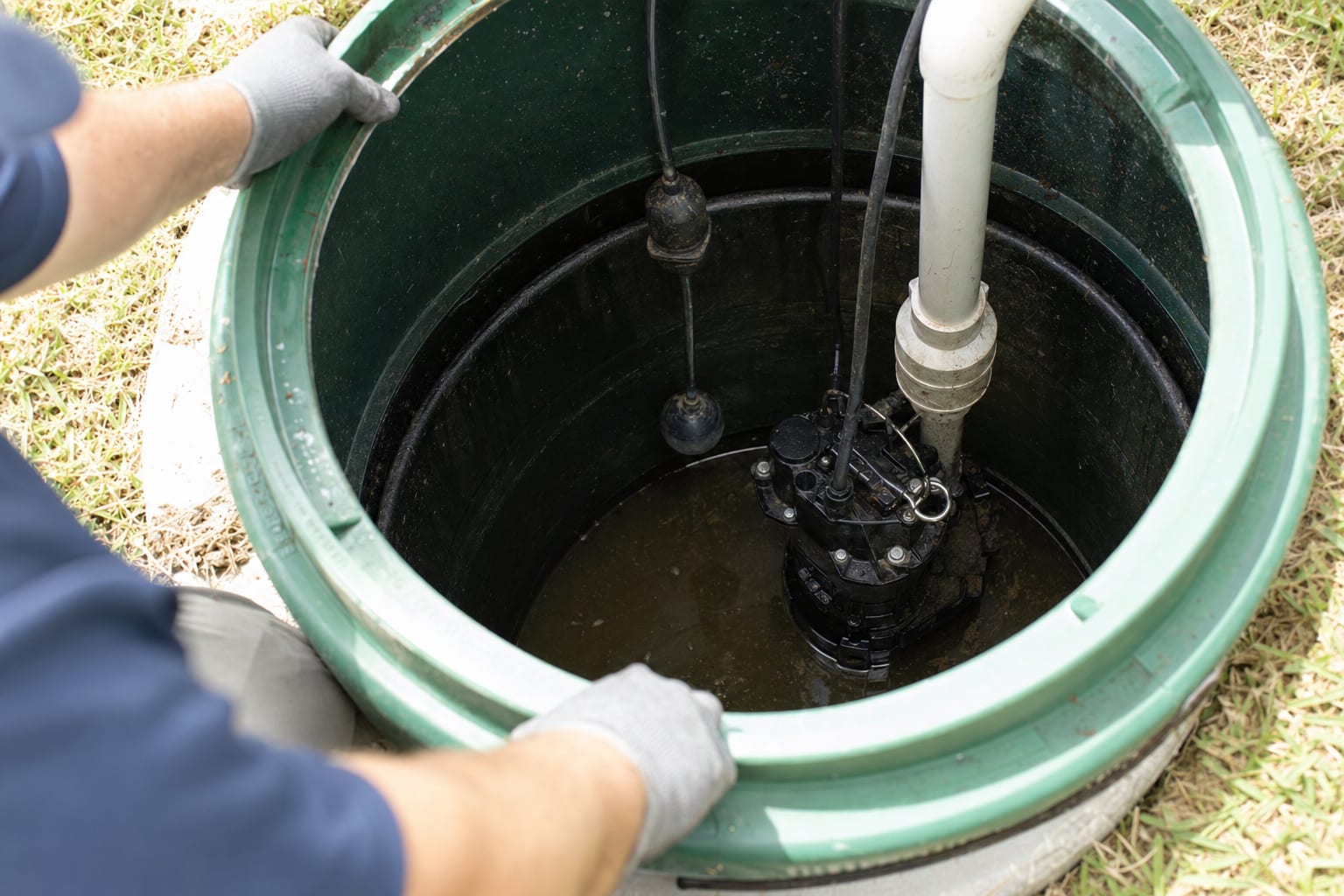
Lift Station & Grinder Pump Service Cape Coral FL

Cape Coral is flat and low. When gravity will not carry waste to the tank or the main, a pump does it, and a pump is the part that fails.

Mon–Sat, 7:00 AM – 7:00 PM · Emergency service 24/7

Cape Coral is flat and close to sea level, so plenty of houses move waste with a pump. A lift station has a pump, three floats, a check valve and a control panel. Any of those can quit.

Why so many Cape Coral homes have a pump

Cape Coral was platted in 1957 across flat ground cut by more than 400 miles of canals. Septic falls downhill, and plenty of lots lack the fall.

Two situations force a pump. A fixture below the tank inlet drops into a basin to be lifted. More common here: the drainfield sits above the tank. Where a lot cannot make the 24 inches Rule 62-6.006(2), F.A.C. requires above the seasonal high water table, sand fill raises it into a mound that has to be fed uphill.

What is inside a Cape Coral lift station

  • The basin. Holds liquid between pump cycles.
  • The pump. Submersible, underwater its whole life.
  • The floats. One says start, one says stop.
  • The alarm float. A third, higher, wired to a buzzer and a light.
  • The check valve. Stops the discharge draining back.
  • The discharge line. Carries it uphill.
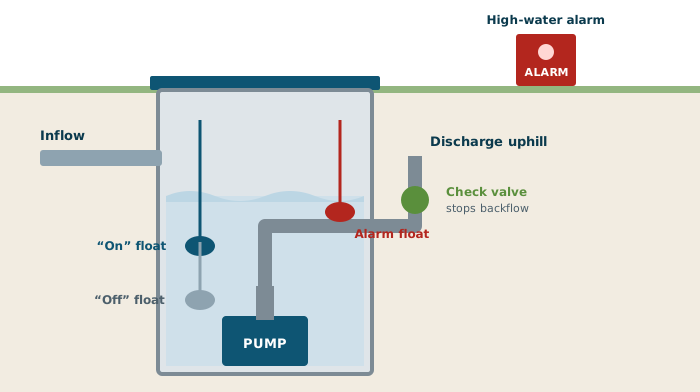
Cutaway diagram of a residential lift station basin showing the inflow, the submersible pump on the floor, the on and off float switches, the high-water alarm float set above them, the check valve, and the discharge line running uphill
The alarm float sits above any level the pump should allow. If it trips, the pump is losing.

The failure behind most calls

It is a float far more often than the motor, one that grease or the wipes sold as flushable have wrapped until it cannot swing. A small switch failure can become a pump replacement.

The rest: a tripped breaker, a failed capacitor, a check valve stuck open so the same water cycles through, a discharge line clogged with settled solids, or a pump at the end.

The alarm is the entire warning system

When the buzzer goes off, stop sending water and check the breaker; a tripped one is free to fix. Do not reach into the basin: it holds raw wastewater around live electrical equipment and produces gases that have killed people in confined spaces.

Storm season runs June 1 through November 30, and the wet season delivers about two-thirds of Cape Coral's roughly 57 inches of rain. A pump with no electricity cannot empty a filling basin, so treat its capacity as small when the power is out.

What determines the service visit

  • Whether the alarm is active and the basin level is rising.
  • Whether the pump is humming, cycling continuously or completely silent.
  • The pump type, basin access and condition of the floats and control panel.
  • Whether the tank or basin needs to be emptied before repair work can begin.

Where we fit

We do the pump-out: emptying a basin before anyone can work in it, or clearing an overdue tank pushing solids into an effluent pump never meant to see them. Sometimes the alarm is a full tank, not a dead pump. Pump replacement, float and panel work and discharge repairs go to the licensed trade.

A pump downstream of a neglected tank eats solids that should have settled. See septic pumping for routine service, or emergency septic service if the alarm is going now. In the sewer conversion, septic tank abandonment covers the tank and its pump. We cover Cape Coral and Lee County.

Lift station and pump questions

Why does my septic system need a pump at all?

Because gravity ran out. Cape Coral is flat, and Rule 62-6.006(2), F.A.C. requires 24 inches between the bottom of the drainfield and the seasonal high water table. Where a lot cannot make that, sand fill raises the drainfield into a mound above the tank, and a pump has to feed it.

What is the alarm box on the side of my house?

The high-water alarm, the only warning the system gives you. A float set above the normal "on" level trips a buzzer and a red light when the liquid climbs higher than the pump should ever let it, which means the pump is not keeping up or is not running. You usually have hours, not days.

The alarm is going off. Can I just silence it?

You can silence the buzzer; most panels have a red button for it. That does not lower the liquid level. Silence it, then stop putting water down the drain (no laundry, no dishwasher, short showers) and get someone out. Every gallon after the alarm goes into a basin already too full.

What is the most common lift station failure?

A stuck float. The floats hang on tethers and tell the pump when to start and stop, and grease, wipes, rags and hair wrap that tether. Stuck down, the pump never starts and the basin fills; stuck up, it runs dry and cooks itself, turning a cheap float into a pump replacement.

Can a lift station problem be diagnosed over the phone?

The alarm, pump sound, liquid level and recent water use help narrow the problem, but a technician still needs to inspect the basin, floats, pump and control panel. Call with the panel behavior and whether the pump is humming or silent.

What is the difference between an effluent pump and a grinder pump?

What they move. An effluent pump sits after the tank and moves clarified liquid; the solids have settled out, so it only lifts water. A grinder pump handles raw wastewater and shreds the solids, which forces waste through a small-diameter line over a long distance or a real climb.

Will connecting to city sewer get rid of my pump?

Sometimes. If the sewer main on your street is deep enough to take your house by gravity, the tank and its pump both come out and the abandonment clock starts. If not, you still need something to lift waste to it. That depends on elevations on your lot. Ask your plumber and the City's UEP office at 1-833-227-3837.

Alarm going off?

Tell us what the panel is doing, whether the pump is humming, and when the tank was last pumped. That is usually enough to tell whether this is a pump-out, a float, or another trade's job.

Call (239) 555-0173 Septic pumping · Cape Coral & Lee County