
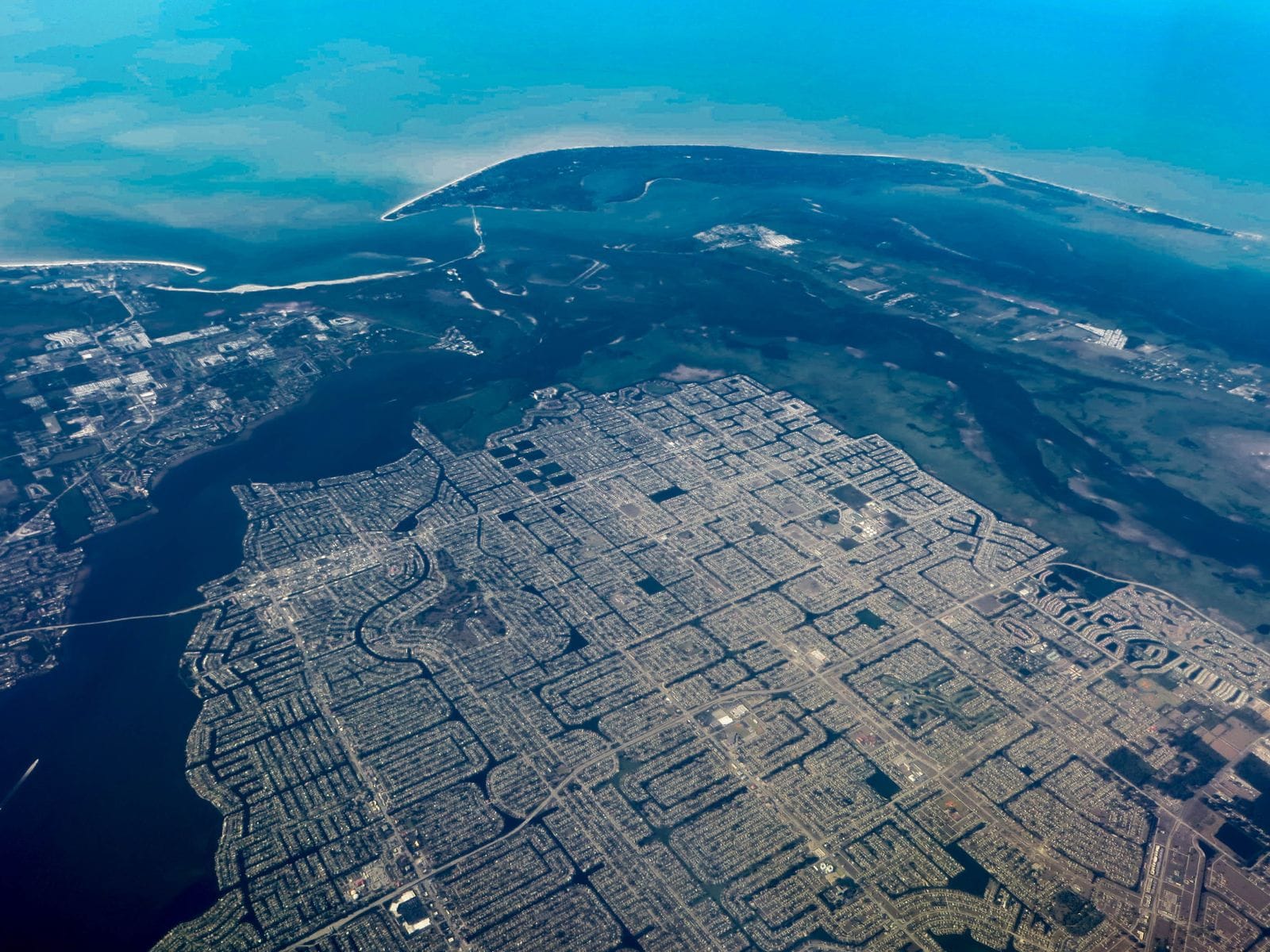
Most septic advice is written for somewhere else. It assumes deep soil, a low water table and a dry season that lasts. Cape Coral has none of those, and the difference determines whether a conventional drainfield can work and whether your tank backs up in August.
First, what a tank is actually doing
A working tank separates what arrives into three layers. Grease and oils float into a scum mat on top. Solids settle into sludge on the floor. Between them sits the clear zone, and only that should ever reach the drainfield.
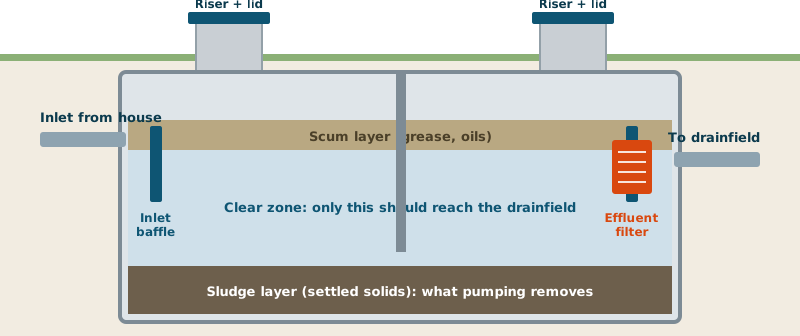
Leave it too long and both layers grow toward each other until the clear zone is gone. Then solids carry out through the outlet and into the drainfield, where they clog the soil that does the actual treatment. That is the whole failure mode, and it is why routine pumping matters.
1. The water table sets the design
Sandy soil drains well here. The problem sits under it. Florida requires 24 inches between the bottom of a drainfield and the seasonal high water table, under Rule 62-6.006(2). On a flat city threaded with 400+ miles of canals, that separation binds almost every lot.
Where the ground cannot give it, clean sand fill has to raise the absorption surface instead. That is a mound system. Two neighbouring lots can require different designs because their seasonal high water table and available area differ.
2. The wet season sets the timing
Cape Coral averages about 57 inches of rain a year, roughly two-thirds of it between June and September. Saturated ground lifts the water table and strips the soil of its ability to absorb effluent.
So a drainfield that coped all winter backs up in August, and nothing changed indoors. The ground simply ran out of room. This is why emergency calls cluster in the wet season, and why a tank sitting near capacity in May is the one that fails in August. Pumping before the season is the preventive version of that story.
3. Ian is still in the ground
Hurricane Ian made landfall in Lee County on September 28, 2022, dropped more than a foot of rain, and pushed a storm surge of up to fourteen feet ashore. Waterlogged soil cannot treat wastewater, and saturated ground around a drainfield stops absorbing effluent altogether. Cape Coral drainage complaints ran for months afterward.
If your system was flooded and has not been looked at since, that is worth resolving before the next wet season rather than during it. UF/IFAS publishes non-commercial guidance on flooded systems in publication AE591, and an inspection will tell you whether the drainfield ever recovered.
What to do with this
- Pump on schedule, not on symptoms. Every three to five years suits most households here. That is EPA and UF/IFAS guidance, not a Florida rule: the state sets no required interval.
- Pump before the wet season, not during it. A tank near capacity in May is a tank that fails in August.
- Know which side of Pine Island Road you are on. North of it is still largely septic. South is mostly on sewer, and if that is you, the abandonment rules matter more than the pumping ones.
If the yard is already telling you something, drainfield repair covers what that looks like. For scheduling, call with the property address, last pump date and the symptoms you are seeing.